Retinoid side effects: What to expect and how to manage them
Published on 18 August 2026Retinoids are among the most extensively researched ingredients used in cosmetic skincare for visible signs of ageing, uneven tone, rough texture and blemish-prone skin. Their benefits develop gradually, but some people experience temporary dryness, tightness, redness or flaking when a retinoid is first introduced or used more frequently.1-3

These effects are often described as retinisation: an adjustment period while the skin becomes accustomed to retinoid activity. Mild symptoms can usually be managed by reducing application frequency, supporting the skin barrier and avoiding an overly intensive routine. Irritation is not proof that a retinoid is working, and the aim should always be consistent use without persistent discomfort.1-3
In this article we explain which effects may occur during the early stages of use, how to distinguish temporary adjustment from more significant irritation and how formulation, application and the wider routine can influence skin comfort.
Why can retinoids cause side effects?
Retinoids influence the way skin cells renew and mature. When a retinoid is introduced, this change in activity can temporarily affect the outer skin barrier, allowing moisture to escape more readily and making the skin feel drier or more reactive.1-3
Not everyone experiences this adjustment, and the response varies according to the type of retinoid, the finished formulation, the amount applied, application frequency, the condition of the skin barrier and any other active ingredients used at the same time.1-3
How to tell mild retinisation from a more intense reaction
Mild dryness or light flaking can occur during the first stages of retinoid use, but symptoms should remain manageable and improve when the routine is adjusted. Increasing pain, swelling or widespread inflammation should not be treated as something to "push through".
| What you may notice | What it can mean | What to do |
|---|---|---|
| Mild dryness, tightness, light flaking or short-lived redness. | A common adjustment response while tolerance develops. | Keep frequency low, moisturise and allow recovery time between applications. |
| Persistent redness, soreness, scaling, repeated stinging or cracking. | The routine may be too intensive for the skin at its current level of tolerance. | Reduce frequency, simplify the surrounding routine and avoid additional exfoliation until the skin is comfortable. |
| Severe burning or pain, swelling, blistering, skin weeping or a widespread rash. | A more significant reaction that should not be treated as normal retinisation. | Stop using the product and seek advice from a healthcare professional before restarting. |
What can temporary retinisation look like?
The most common early effects are mild and localised. They should improve when the routine is adjusted and as skin tolerance develops – they include:
Dryness and tightness
Dryness is one of the most frequently reported effects during retinoid introduction. A moisturiser containing ingredients such as niacinamide, ceramides or hyaluronic acid can help maintain hydration and support skin-barrier comfort.6-8
Flaking or peeling
Light flaking can occur, but visible peeling is not required for a retinoid to be effective. Avoid scrubs, cleansing brushes and additional exfoliating acids while the skin is unsettled, as these may further disrupt the barrier.
Redness or stinging
Mild, short-lived redness or stinging may occur when the skin is adapting, particularly if the product is applied too frequently, used on damp skin or combined with several other active ingredients. Symptoms should improve when application is reduced and the surrounding routine is simplified. Persistent burning, swelling or worsening redness requires a different response and should not be pushed through.
Retinoid “purging” or irritation: What is the difference?
The word “purging” is often used online to describe any increase in blemishes after starting a retinoid, but not every flare-up should be assumed to be a necessary adjustment. Some acne-prone users may notice temporary blemishes in areas where they usually break out as blocked pores become visible more quickly. Others may be experiencing irritation, an unsuitable formula or acne that needs medical assessment.13
| Possible temporary breakout | More suggestive of irritation | |
|---|---|---|
| Where it occurs | Usually in areas where you commonly experience blemishes. | May appear in new areas or become more widespread. |
| What accompanies it | Blemishes without marked burning, swelling or diffuse redness. | Persistent redness, burning, soreness, scaling or increasing inflammation. |
| What to do | Keep the routine simple and monitor progress while following product directions. | Reduce or stop the retinoid and seek advice if symptoms persist, become painful or begin to scar. |
For adults using retinoids to address acne-prone skin, persistent flare-ups should not be managed indefinitely through cosmetic skincare alone. If blemishes remain inflamed or painful, are beginning to scar or are not settling despite an appropriate routine, seek advice from a GP, pharmacist or dermatologist. Medical treatment, which may include a prescribed retinoid such as tretinoin where clinically appropriate, may be needed. Cosmetic retinoids can support acne-prone skin, but they are not a replacement for medical care when adult acne is persistent or severe.13
How long does retinisation last?
There is no single timeline that applies to every person or every retinoid formula. Some people experience little or no adjustment, while others need several weeks at a low frequency before the skin feels comfortable. The key is that symptoms should become easier to manage as tolerance develops, rather than becoming progressively worse.1-3
Instead of using side effects as a timetable, use skin comfort to guide progression. The schedule below is a practical example of how a retinoid can be introduced gradually.
| Stage | Suggested frequency | Progress when... |
|---|---|---|
| Weeks 1–2 | Two evenings per week | The skin is comfortable between applications, without persistent redness or peeling. |
| Weeks 3–4 | Increase to alternate evenings if tolerated | The current frequency is well tolerated and product directions allow. |
| Week 5 onwards | Progress towards nightly use if appropriate | The skin remains comfortable. Staying at a lower frequency for longer is also fine. |
The goal is not to reach the highest percentage or nightly use as quickly as possible. In practice, a lower-potency retinoid that your skin can use consistently is often more useful than a higher-potency formula that causes repeated irritation and long gaps in use. Consistency and tolerability are central to long-term results.1-3
How to minimise retinoid side effects
The most effective approach is not to wait for significant irritation and then react. Build tolerance deliberately from the beginning.
- Start with a low frequency. Begin with two evenings per week and maintain that schedule until the skin feels comfortable. Increase only when the product directions allow and the current frequency is well tolerated.
- Use the recommended amount. For a facial retinoid serum, a pea-sized amount is generally sufficient for the whole face. Applying more will not produce faster results and is more likely to increase irritation.
- Apply to clean, dry skin. Allowing the skin to dry fully after cleansing may reduce stinging, particularly during the first weeks of use.
- Avoid the most reactive areas unless the formula is intended for them. Keep a standard facial retinoid away from the eyelids, lips and corners of the nose, where skin can be more vulnerable.
- Follow with a moisturiser. Barrier-supporting skincare can help maintain hydration and make consistent use easier. Niacinamide, ceramides and hyaluronic acid can support hydration and barrier function, but the overall formulation and texture should also suit the individual skin concern.6-8
- Introduce complementary actives gradually. Vitamin C can be used in the morning once the routine is established, while separate AHAs or BHAs should be introduced cautiously rather than added at the same time as a new retinoid.
- Reduce frequency rather than pushing through persistent irritation. A sustainable schedule is more valuable than nightly use that repeatedly disrupts the skin barrier.
- Do not progress to a higher strength too quickly. A higher retinoid percentage is not automatically more effective, and percentages cannot be compared directly across different retinoids or delivery systems. Progress to a higher percentage only when your current formulation is well tolerated; lower-strength, regular use is preferable and more effective than inconsistent use of a higher percentage retinoid.1-3

Why daily photoprotection is essential alongside retinoids
Photoprotection should be used alongside a retinoid as part of the same long-term skincare strategy. Retinoids support gradual renewal in the evening, while daytime photoprotection helps defend the skin against further UV-induced damage - one of the main contributors to visible photoageing and uneven pigmentation.10,11
Cantabria Labs recommends applying a high-level, broad-spectrum sunscreen every morning. The HELIOCARE 360° range provides very high-level, full-spectrum photoprotection with formulations designed for different skin types and preferences. During prolonged outdoor exposure, reapply in line with the product directions and after swimming, sweating or towel drying. Sunscreen should also be used alongside shade, protective clothing, sunglasses and a hat.

Read about how to safely use retinoids in summer
Why retinoid formulation matters
Side effects are influenced by more than the retinoid name or percentage. Retinol and retinal are sensitive to light, air and heat, and retinal is particularly reactive. Encapsulation, controlled-release delivery, protective packaging and supporting ingredients can all influence stability, performance and how the formula feels on the skin.2,3
A formulation designed to deliver retinoid activity gradually may be easier to use consistently than one selected on percentage alone. This is especially relevant when a retinoid is combined with other renewing ingredients.
| Technology | How the technology works | Why Cantabria Labs uses it |
|---|---|---|
| RETINDUO® | Combines pure retinol in Microsponges with retinal in AOX-TECH nanovesicles, supported by a targeted booster complex to optimise stability and controlled delivery. | We use RETINDUO® within ENDOCARE RENEWAL to combine complementary retinoid forms in protective delivery systems, supporting visible improvement in signs of skin ageing while helping make consistent use more achievable. |
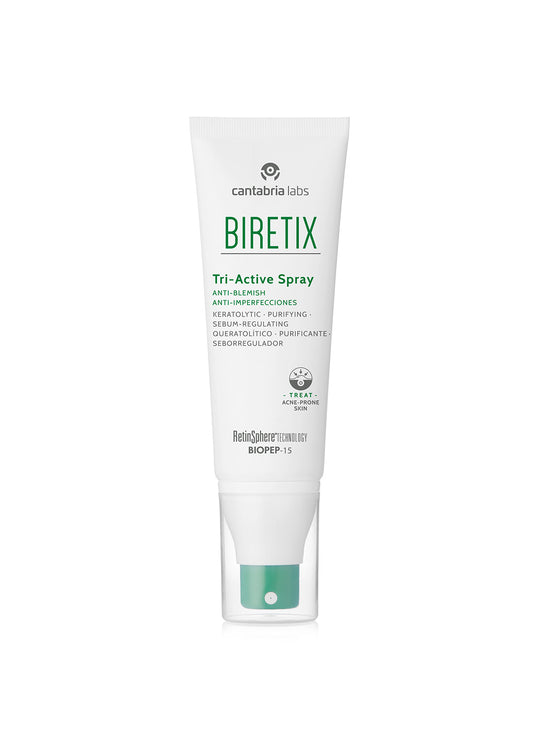
| RETINSPHERE® | Pairs HPR with stabilised, encapsulated retinol for gradual, controlled delivery. | We use RETINSPHERE® within selected BIRETIX formulas for acne-prone skin because controlled delivery helps balance renewing activity with skin comfort, including in multi-active formulations.12 |
The two technologies are designed for different skin concerns rather than positioned as steps on one universal strength ladder. RETINDUO® is used within ENDOCARE for visible signs of ageing, while RETINSPHERE® is used within BIRETIX for acne-prone skin. In both cases, the complete formulation and the way it is introduced are central to tolerability.

When should you stop and seek professional advice?
Mild dryness or light flaking can often be managed by reducing frequency and supporting the skin barrier. Stop using the product and seek professional advice if you experience:
- Severe or persistent burning or pain.
- Swelling, blistering or skin weeping.
- A widespread rash or symptoms beyond the application area.
- Cracking, marked soreness or an eczema or rosacea flare that does not settle.
- Irritation that continues despite reducing frequency and simplifying the routine.
- Persistent, painful or scarring adult acne that is not improving with cosmetic skincare.
If you are using tretinoin, follow the instructions given by your prescriber and contact the healthcare professional managing your treatment before making significant changes to the strength or frequency.
Key takeaways
- Mild dryness, tightness, redness or light flaking can occur while the skin adapts to a retinoid, but irritation is not required for results.
- There is no fixed retinisation timeline. Skin comfort should improve rather than progressively worsen.
- Start with a low frequency, use the recommended amount and increase only when the current schedule is well tolerated.
- The complete formulation - including stability, delivery technology and barrier-supporting ingredients - influences tolerability as well as performance.
- Daily high-level, broad-spectrum photoprotection is an essential part of a retinoid routine.
- Do not assume persistent adult acne flare-ups are simply “purging”; seek medical advice if acne is painful, inflammatory, scarring or not settling.