Retinoids explained: Retinol vs retinal vs tretinoin
Published on 31 July 2026Retinol, retinal and tretinoin are often grouped together in skincare conversations, but they are not interchangeable. All three belong to the retinoid family - vitamin A derivatives that support skin renewal - yet they differ in how the skin uses them, how they are formulated, how they are accessed and how likely they are to cause irritation.1-3
This is why choosing a retinoid is not as simple as finding the "strongest" option. Stability, delivery technology, the overall formula and how consistently your skin can tolerate it all affect performance, results and tolerability.2,3
This article explains how retinol, retinal and tretinoin differ, where HPR and retinyl esters fit within the wider retinoid family, and why formulation matters when choosing a retinoid for visible signs of skin ageing or acne-prone skin.
First, what does 'retinoid' mean?
Retinoid is the umbrella name for a family of vitamin A derivatives. Once active in the skin, retinoids send signals that help regulate normal skin-cell renewal. This is why they are widely used to improve the appearance of fine lines, uneven tone, rough texture and blemish-prone skin.1,2
Retinol, retinal and tretinoin are all retinoids, but they differ in how directly they act. Retinol and retinal must first convert within the skin to reach retinoic acid, the active form, while tretinoin is retinoic acid itself. Retinol and retinal are cosmetic ingredients, whereas tretinoin is a prescription medicine in the UK and should be only be used under clinical supervision.1-3,5

Retinol vs retinal vs tretinoin at a glance
No single form is best for every person or every skin concern. The table below separates the main potential advantages from the points to consider.1-3,5,7
| Retinoid | How the skin uses it | Availability | Potential advantages | Things to consider |
|---|---|---|---|---|
| Retinol | Converted into retinal and then retinoic acid (two steps). Used in cosmetic skincare. | Over the counter | Well-established and widely used. Generally easier to stabilise than retinal. May offer a suitable starting point in a well-formulated product. | Sensitive to light, air and heat. Can cause dryness or irritation. Performance depends on concentration, delivery and consistent use. |
| Retinal (retinaldehyde) | Converted into retinoic acid in one step. Used in cosmetic skincare. | Over the counter | One step closer to active retinoic acid. Can provide effective cosmetic retinoid activity in an appropriately stabilised formula. | Less stable and more chemically reactive than retinol. Requires careful stabilisation and packaging. Tolerability varies between formulas and individuals. |
| Tretinoin | Retinoic acid itself, so no conversion is required. | Prescription only (UK) | Has the most extensive clinical evidence for photoageing and is also used medically in acne management. | More likely to cause dryness, redness and peeling, particularly at first. Prescription only and not a cosmetic "step up". |
Conversion steps explain chemistry, not a universal strength scale. A stable, well-formulated cosmetic retinoid that your skin can use consistently may be more appropriate than a more intensive option that repeatedly causes irritation.
How the retinoid conversion pathway works
In the conventional vitamin A pathway, the skin converts retinyl esters into retinol, retinol into retinal and retinal into retinoic acid.1-3
Do fewer conversion steps mean better results?
Not necessarily. The skin does not convert every ingredient at the same rate, and the amount that remains stable and reaches the skin depends on the finished formula. This means claims that retinal is a fixed number of times stronger than retinol cannot be applied reliably to every product.2,3
A well-stabilised retinol formula may perform better in practice than a poorly formulated retinal product, and vice versa. The more useful question is not only "which retinoid does it contain?" but also "how has that retinoid been protected, delivered and tested?"
The main retinoids explained
Retinol
Retinol is the most familiar cosmetic retinoid and has a long history of use in dermatological skincare. Although it must be converted into retinal and then retinoic acid, clinical research shows that consistent topical use can improve the appearance of fine lines and overall skin quality.3,4
Retinol is generally easier to stabilise than retinal, but it is still sensitive to light, oxygen and heat. Its performance depends on the concentration, delivery system, packaging and how often it can be used without causing persistent irritation. For many people, a well-formulated retinol product offers a practical introduction to vitamin A skincare.2,3
Retinal (Retinaldehyde)
Retinal - also called retinaldehyde - sits one conversion step away from retinoic acid. This closer position in the pathway has made it increasingly popular in advanced cosmetic skincare, particularly for people looking to progress from retinol.1-3
However, retinal is more chemically reactive and less stable than retinol. It therefore needs careful stabilisation, protective packaging and, in some formulas, encapsulation. It is not automatically better than retinol, and it should be introduced gradually according to skin tolerance.2,3
Tretinoin
Tretinoin is retinoic acid itself, so it can act without first being converted by the skin. It has the most extensive clinical evidence among topical retinoids for photoageing and is also used medically in acne management.2,5
In the UK, tretinoin is a prescription medicine. Dryness, redness, peeling and irritation are more common during the early stages of treatment, so it should be used exactly as advised by the healthcare professional managing your care. Tretinoin should not be viewed as a cosmetic upgrade to pursue without clinical assessment.5,10
What about HPR and retinyl esters?
Retinyl esters, such as retinyl palmitate and retinyl propionate, are vitamin A derivatives that require several conversion steps before becoming retinoic acid - the form recognised and used by the skin. They must first be converted into retinol, followed by retinal and finally retinoic acid. Because of this longer conversion pathway, retinyl esters are generally considered gentler than retinol or retinal, although their effectiveness still depends on the concentration and overall formulation.
Hydroxypinacolone retinoate, more commonly known as HPR, is also an ester, but it differs from traditional retinyl esters. HPR is derived from retinoic acid rather than retinol, and laboratory research suggests that it can interact more directly with retinoid receptors without following the same conversion pathway. This makes it a useful cosmetic retinoid for formulations designed to combine effective skin renewal with good tolerability.

Why retinoid formulation matters
Retinoids are active ingredients, but they are also delicate. A product can contain a recognised retinoid at an impressive-sounding percentage and still underperform if the ingredient is not kept stable or delivered effectively. The finished formulation - not just the ingredient name - influences efficacy, tolerability and how easy the product is to use consistently.2,3
Stability and packaging
Light, air and heat can break down retinol and retinal over time. Retinal is particularly reactive and generally more difficult to stabilise than retinol. Opaque or airless packaging, antioxidant systems and clear storage instructions can help protect the formula until it is applied.2,3
Encapsulation and controlled release
Delivery systems, such as encapsulation, can help protect a retinoid within the formula. Controlled-release technologies can also release it more gradually, which may help balance effective delivery with skin comfort. These systems do not remove the possibility of irritation, but they can change how the ingredient behaves on the skin.2,3
The supporting formula
The base of the product and the ingredients around the retinoid also matter. Hydrating and barrier-supporting ingredients can help maintain comfort, while the texture of a serum, cream or gel can influence whether it suits dry, oily or acne-prone skin. A higher percentage is therefore not automatically a better choice.
What to look for in a retinoid formula
- A stabilised ingredient in packaging that limits exposure to light and air.
- A delivery system suited to the retinoid being used.
- Supporting ingredients that help maintain hydration and skin-barrier comfort.
- Clear guidance on frequency, storage and gradual introduction.
- A formula designed for your main skin concern, rather than selected by percentage alone.
This is why dermatologists look at the complete formula, the evidence behind it and the way the skin responds - not simply the number of conversion steps or the highest percentage on the label.
Top tip: Store your retinoid in a cool, dry place away from direct sunlight, keep the lid tightly closed and always follow the product's period after opening (PAO) guidance.
Cantabria Labs retinoid technologies
| Technology | How the retinoids are delivered | Main skincare focus |
|---|---|---|
| RETINDUO® | RETINDUO® is an exclusive dual-retinoid technology that combines pure retinol in microsponges with AOX Tech-encapsulated retinal, supported by a targeted natural booster complex to optimise bioavailability, enhance retinoid stability and deliver powerful yet controlled skin renewal. | Used within ENDOCARE for visible signs of skin ageing, with a focus on texture, tone and signs of photoageing. |
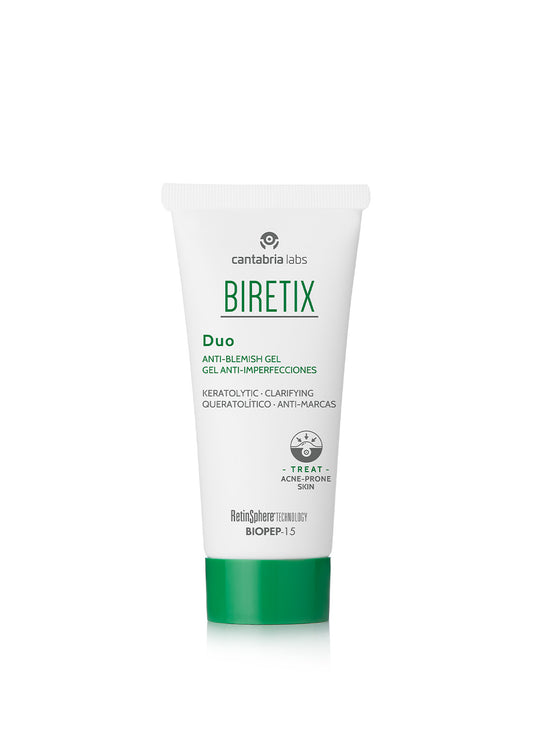
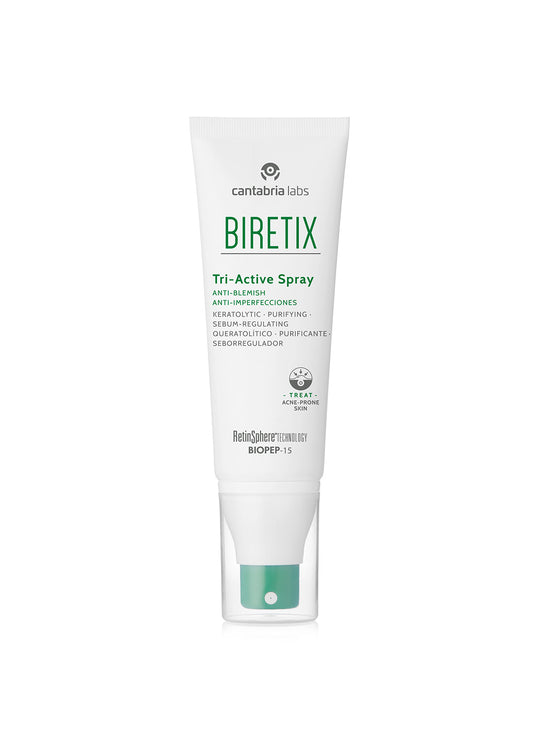
| RETINSPHERE® | Combines HPR with stabilised, encapsulated retinol in a dual-retinoid, controlled-release approach. | Used within BIRETIX for acne-prone skin, with a focus on renewal, blocked pores, texture and visible clarity. |
RETINDUO® illustrates how retinol and retinal can be combined within complementary delivery systems to support effective, well-tolerated results for the visible signs of skin ageing. Meanwhile, RETINSPHERE®, used within BIRETIX for acne-prone skin, combines hydroxypinacolone retinoate (HPR) with encapsulated retinol for gradual, controlled release.
This slower delivery is particularly important in BIRETIX formulations that also contain complementary active ingredients, such as AHAs and BHAs, helping to support skin tolerability when multiple actives are used together. In both cases, the technology and the finished formula are central to how the retinoids are used.

Which retinoid is right for your skin?
The most appropriate option depends on your main skin concern, previous retinoid experience, the condition of your skin barrier and the formula you are most likely to use consistently.2,3
For visible signs of skin ageing
Retinol, retinal and HPR-containing cosmetic formulations may all have a place in routines targeting fine lines, uneven tone and rough texture. Within Cantabria Labs, RETINDUO® is the key retinoid technology used in ENDOCARE for visible signs of skin ageing.
For acne-prone skin
Retinoids can support normal cell turnover around the follicles, helping to reduce the build-up that contributes to blocked pores. RETINSPHERE® is the key retinoid technology used in BIRETIX for acne-prone skin. Persistent, moderate or severe acne requires professional assessment, and tretinoin may form part of a prescribed treatment depending on the clinical context.9,10
For skin new to retinoids or prone to sensitivity
There is no single retinoid that is automatically best for every beginner or sensitive skin type. A low-frequency introduction, controlled delivery, barrier-supporting ingredients and a simple surrounding routine can be more important than whether the label says retinol or retinal. Progress only when the skin remains comfortable.2,3
In summary
- Retinoid is the umbrella term; retinol, retinal, HPR and tretinoin are different members of the same vitamin A-related family.
- Retinol requires two conversion steps to retinoic acid, retinal requires one and tretinoin is retinoic acid itself - but conversion steps alone do not determine results.
- Retinal is less stable and more chemically reactive than retinol, so formulation and packaging are particularly important.
- The finished formula - including stability, delivery systems, supporting ingredients and tolerability - matters as much as the retinoid name or percentage.
- RETINDUO® is used within ENDOCARE for visible signs of skin ageing, while RETINSPHERE® is the key retinoid technology within BIRETIX for acne-prone skin.