When should you start using retinoids? (And who should avoid them)
Published on 21 August 2026There is no single age at which everyone should start using a retinoid. The right time depends on the skin concern you want to address, the condition of your skin barrier and what you’re skin goals are and if a retinoid would help you achieve this.1-3
Some people introduce a retinoid to address early visible signs of skin ageing, uneven tone or rough texture. Others use one as part of a routine for acne-prone skin and post-blemish marks. Retinoids may therefore have a place at different stages of life, but they are not an automatic requirement for everyone.1-5
In this article, we explain how to decide whether a retinoid is appropriate for your skin concern, when it may be better to delay starting or seek advice, and how to introduce one in a way that supports long-term skin comfort.
There is no single “right” age to start using a retinoid
Age can influence the concerns we notice, but skin does not change according to one universal timetable. Genetics, cumulative UV exposure, lifestyle, hormonal changes and the way the skin has been cared for all effect when fine lines, pigmentation, dryness or changes in texture become visible.1-4
A more useful question than “Am I old enough for retinol?” is “Do I have a skin concern that a retinoid could appropriately address?” If the answer is yes, consider whether your skin barrier is comfortable and whether the rest of your routine is suitable for retinoid use.
Which skin concerns can a retinoid help address?
The reason for starting matters more than age alone. A retinoid may be worth considering when you want to improve one or more of the following concerns:
| Skin concern | Why someone may consider a retinoid | Important considerations |
|---|---|---|
| Fine lines and wrinkles | Retinoids can help improve visible signs of photoageing, including fine lines and wrinkles, with consistent use.1-5 | Results develop gradually. Daily high-level, broad-spectrum photoprotection remains an important part of the routine.9,10 |
| Uneven tone or pigmentation | A retinoid may help improve the appearance of uneven-looking tone and sun-induced pigmentation.1-5 | Photoprotection is essential to help protect against further UV-induced damage.9,10 |
| Rough or uneven texture | Retinoids support skin-cell renewal and may help improve rough or irregular-looking texture.1-3 | Introduce gradually, particularly if the skin is dry, reactive or not currently comfortable. |
| Dullness | Dullness may be one reason to consider a retinoid, particularly when it appears alongside uneven tone or changes in texture. | Choose a formulation that suits the skin and prioritise consistent use rather than starting with the most intensive option. |
| Enlarged-looking pores or congestion | Retinoids may support normal skin-cell renewal around the pores and help improve the appearance of congestion and uneven texture.1-3 | If congestion is part of persistent, painful or inflammatory acne, seek professional advice rather than relying on skincare alone.11 |
| Acne-prone skin and post-blemish marks | Retinoid skincare may support acne-prone skin and help improve the appearance of post-blemish marks and uneven texture.1-3,11 | Persistent, painful, inflammatory or scarring acne should be assessed by a GP, pharmacist or dermatologist.11 |

Choosing the right type of retinoid
Retinoids are sometimes presented as a simple ladder from mild to strong, but this does not reflect how finished formulations perform. Conversion steps are only one part of the story; stability, delivery and skin tolerance also matter.1-3
| Retinoid | Conversion pathway | What to consider |
|---|---|---|
| Retinol | Converted into retinal and then retinoic acid within the skin (two conversion steps). | Often used when introducing vitamin A skincare, but still requires careful stabilisation and gradual use.1-4 |
| Retinal | Converted into retinoic acid within the skin (one conversion step). | More chemically reactive and less stable than retinol, making formulation and packaging particularly important.2,3 |
| HPR and retinyl esters | HPR is an ester of retinoic acid and follows a different route from the retinol-to-retinal conversion pathway; traditional retinyl esters also differ from HPR. | HPR follows a different route from retinol; its evidence base is growing and performance depends on the complete formulation.3,12 |
| Tretinoin | Retinoic acid itself, so no conversion is required. | Acts directly and has extensive clinical evidence, but has a higher potential for irritation and requires medical oversight.2,5 |
Learn more about the differences between retinol, retinal and tretinoin
When should you delay starting a retinoid or seek professional advice?
There are times when it is better to delay starting a retinoid until the skin has settled, or to speak to a healthcare professional before introducing one.
During pregnancy or breastfeeding
As a precaution, topical retinoids are generally not recommended during pregnancy or while breastfeeding unless a qualified healthcare professional has specifically advised otherwise. Speak to your GP, midwife, pharmacist or dermatologist before using a vitamin A derivative if you are pregnant, planning a pregnancy or breastfeeding.12
When the skin barrier is compromised
Do not introduce a retinoid while the skin is significantly irritated, cracked, sore or actively flaring with eczema or rosacea. Focus first on gentle cleansing, moisturising and restoring skin comfort. Once the barrier is settled, professional advice may help determine whether and how a retinoid can be introduced.2,3,7
When you are already using several active ingredients
Starting a retinoid at the same time as separate AHAs, BHAs or other potentially irritating products makes it harder to identify the cause of any reaction and may increase discomfort. Introduce one significant change at a time. Complementary ingredients, such as vitamin C in the morning, can be added gradually once the core routine is established.
When acne is persistent, painful or scarring
Cosmetic skincare may support mild adult acne-prone skin, but persistent, moderate or severe acne requires professional assessment. Seek advice if flare-ups are painful or inflammatory, are leaving scars or are not improving with an appropriate routine. A healthcare professional can assess whether prescribed treatment is needed.11

How to introduce a retinoid successfully
The way a retinoid is introduced often matters as much as the ingredient selected. The aim is to establish a frequency the skin can tolerate consistently rather than progressing as quickly as possible.1-3
- Begin with two evenings per week. Maintain this frequency until the skin feels comfortable, then increase only when the product directions allow.
- Use the recommended amount. For a facial serum, a pea-sized amount is generally sufficient for the entire face; applying more will not produce faster results.
- Apply to clean, dry skin. Allowing the skin to dry fully after cleansing may reduce stinging, particularly during the first weeks of use.
- Follow with a moisturiser. Barrier-supporting ingredients such as niacinamide, ceramides and hyaluronic acid can help maintain hydration and comfort.6-8
- Introduce other active ingredients gradually. Avoid adding several exfoliating acids at the same time as a new retinoid.
- Apply high-level, broad-spectrum photoprotection every morning. Retinoids and sunscreen have complementary roles: one supports evening renewal while the other helps protect against further UV-induced damage during the day.9,10
Temporary dryness, tightness, light flaking or mild redness can occur during the early stages of use, but a retinoid does not need to make the skin peel or feel inflamed to be effective. Reduce frequency if discomfort persists and stop to seek advice if symptoms become severe or continue to worsen.2,3

Learn more about retinoid side effects
Why formulation matters when you are starting
The name of the retinoid and the percentage on the label do not tell you how a finished product will behave. Retinol and retinal are sensitive to light, air and heat; retinal is particularly reactive. Encapsulation, controlled-release systems, protective packaging and supporting ingredients can all influence stability, delivery and skin comfort.2,3
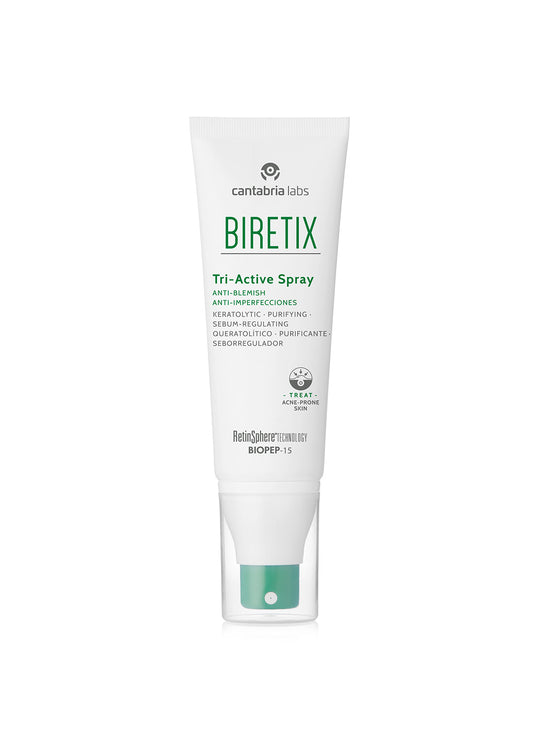
This is why Cantabria Labs uses targeted retinoid delivery technologies rather than relying on percentage alone. RETINDUO® and RETINSPHERE® are used for different skin concerns, with each system designed to support stability, controlled delivery and consistent use.
| Technology | How the technology works | Why Cantabria Labs uses it |
|---|---|---|
| RETINDUO® | Combines pure retinol in Microsponges with retinal in AOX-TECH nanovesicles, supported by a targeted booster complex to optimise stability and controlled delivery. | We use RETINDUO® within ENDOCARE RENEWAL to combine complementary retinoid forms in protective delivery systems, supporting visible improvement in signs of skin ageing while helping make consistent use more achievable. |
| RETINSPHERE® | Pairs HPR with stabilised, encapsulated retinol for gradual, controlled delivery. | We use RETINSPHERE® within selected BIRETIX formulas for acne-prone skin because controlled delivery helps balance renewing activity with skin comfort, including in multi-active formulations.12 |

In summary
- There is no single correct age to start a retinoid; the right time depends on your skin concern, barrier condition and ability to use it consistently.
- Retinoids may be used for visible signs of ageing, uneven tone, rough texture, congestion and acne-prone skin, but they are not automatically necessary for everyone.
- Start with a low frequency, use the recommended amount and prioritise consistent use of a well-tolerated formulation rather than moving up strengths quickly.
- The complete formulation - including stability, delivery technology and barrier-supporting ingredients - matters as much as the retinoid name or percentage.
- Seek professional advice for persistent, painful or scarring adult acne, or for severe or worsening irritation.
- Daily high-level, broad-spectrum photoprotection – such as HELIOCARE 360° - is an essential part of every retinoid routine.