Winter windows: How indoor light and daylight cause skin stress
Published on 29 January 2026When we think about the skin’s exposure to light, the focus often falls on bright summer days that are spent outdoors. So when the weather turns cold and we naturally spend more time inside, it’s easy to forget about daily sun protection. But our skin’s interaction with light does not suddenly stop when the sky is cloudy and grey, or the moment we step indoors. While indoor light is less intense than sunshine at the height of summer, our skin continues to have steady, low-level contact with light sources throughout the day.
Why we assume indoors means no skin exposure
Many people associate skin exposure with direct sunlight, especially when the sun is at its brightest and temperatures are high. Being indoors often feels like a boundary, where the risk of skin damage stops. If we’re inside, with windows closed and ‘normal’ temperatures, surely sunscreen is unnecessary? But our skin continues to respond to light, even if we’re out of direct sunlight.
What types of light reach the skin indoors?
Different types of light behave in different ways. Ultraviolet radiation, the invisible rays that are part of the natural energy of the sun, has three main types: UVA, UVB and UVC. They are classified by their wavelengths and energy, with UVA rays having the longest wavelength and lowest energy, UVB rays being shorter and more energetic, and UVC rays being so short and powerful that they are blocked by the ozone layer. UVA radiation penetrates deep into the skin, causing damage that leads to premature skin ageing, skin cell mutations and skin cancer. UVB rays affect the outermost layers or skin, leading to tanning or sunburn in the short term, and increasing the risk of skin cancer in the longer term.
But beyond UV radiation are visible light and infrared-A. Visible light makes up part of the spectrum that we can see, being present in daylight and artificial light sources, and easily passing through windows. It can penetrate the full depth of the skin.1 Meanwhile, infrared-A is the most intense form of infrared radiation, felt as heat.
UVB radiation is mostly blocked by window glass, which is what gives people a false sense of security. However, UVA, visible light and infrared-A can still reach the skin indoors and cause damage.
How daylight travels through windows
We should always consider windows as a filter, rather than a barrier, from the sun’s rays. While most UVB radiation is blocked, UVA radiation can still pass through, along with visible light and infrared-A. This means that experiencing daylight through a window will still affect the skin. Cloud coverage is much the same. While daylight may be dimmed, radiation still interacts with the skin.
When it comes to the sun’s rays and light, our skin is not responding to brightness or temperature - it is responding to wavelength and duration. That’s why sitting beside a window for several hours will result in cumulative exposure, even without direct sun.

Artificial light and skin stress: What we know
Along with the radiation that travels through windows, there are a number of other light sources that can cause skin damage indoors. Blue light from screens, LEDs and indoor lighting are an integral part of daily life, especially during the winter months.
All of these light sources contribute to our total daily light load. While artificial light is lower in intensity than sunlight, it must still be considered, due to the continuity of exposure. Daily screen use, office lighting and prolonged periods indoors mean light exposure accumulates, generating reactive oxygen species (ROS) and free radicals, and inducing oxidative stress within the skin.
Blue light is primarily produced by the sun (that’s why the sky is blue), but it is also emitted by devices. LED lighting also emits a broad spectrum with a very high blue light component.2 Blue light has the highest energy within the visible light spectrum, with a powerful wavelength of 400-495 nanometres. This means it can be absorbed to the deepest layers of skin, generating ROS and damaging cells. And with recent studies showing the average person spends around six hours per day using a screen, the problem of cumulative exposure and blue light becomes apparent.3
How light exposure triggers skin stress at a cellular level
Light affects the skin through the generation of free radicals, unstable molecules that cause a cascade of oxidative stress. It is this process that causes skin damage, including breaking down collagen production and reducing skin barrier function. This is a gradual process which can often go unnoticed, as the skin does not experience the immediate redness or burning that is related to UVB rays. Instead, our skin experiences low-level damages that progress over time, leading to long-term skin damage.
Why indoor exposure matters more in winter
At wintertime, UV intensity may be reduced, but our overall interaction with light continues.
During the day, we spend a lot of time working on screens, often sitting near windows. In the evening, we sit under artificial light, continuing to use screens. It is this continuous exposure that leads to skin damage, and also explains why we may continue to experience skin concerns like dullness and sensitivity, even when we’ve not spent much time in direct sunlight.
Reduced outdoor UV exposure does not equal reduced light stress. Instead, our skin exposure becomes more steady and evenly distributed across the day. What’s more, our skin is completely unprotected, because daily SPF feels unnecessary.

Why dermatologists talk about ‘full-spectrum’ protection
In order to protect the skin from light damage, whether we are outdoors or inside, we need to move beyond UV-only thinking. That’s where full-spectrum protection comes in. Daily use of full-spectrum SPF will protect the skin against premature skin ageing and the DNA damage that leads to skin cancers.
“While UV remains the main driver of skin cancer risk, visible light and infrared-A also contribute to pigmentation, inflammation, and premature skin ageing. Daily full-spectrum protection supports long-term skin health by addressing this cumulative, low-level exposure across all seasons, including winter.”
Full-spectrum skin protection acknowledges the cumulative exposure of light in many different environments. It goes beyond traditional UV coverage, protecting the skin from all the damaging aspects of sunlight and artificial light. This includes UVA, UVB, visible light (including blue light) and infrared-A.
Of course, this shouldn’t suggest that there is great danger indoors. But it’s important to understand the risks of cumulative light exposure, and why it’s so important to protect the skin every single day, helping to prevent the risks associated with both natural and artificial light, and to promote skin health all year round.
Skin is exposed to light wherever you spend your day
Our skin cannot distinguish between the outdoors and indoors; it simply responds to any light that is present. That’s why we must reframe the idea of protection against sunlight, to protection against all types of light. UV rays, visible light, infrared-A and artificial lighting all contribute to low-level skin stress. And it is this cumulative exposure that needs to be considered.
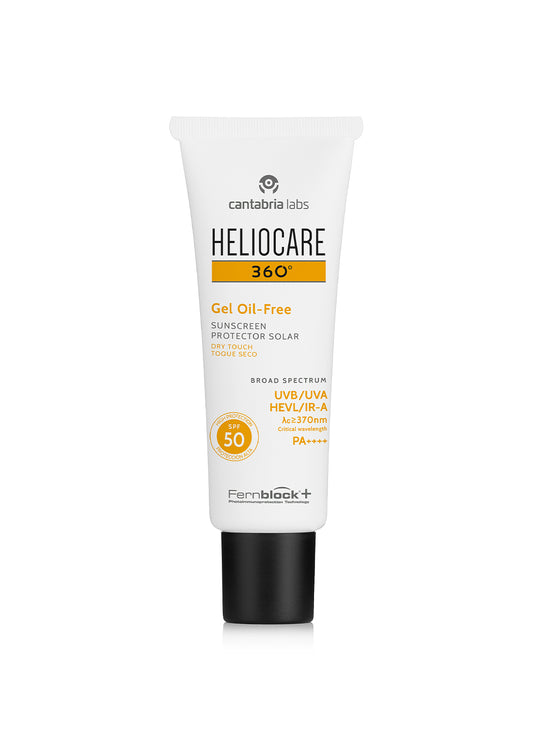
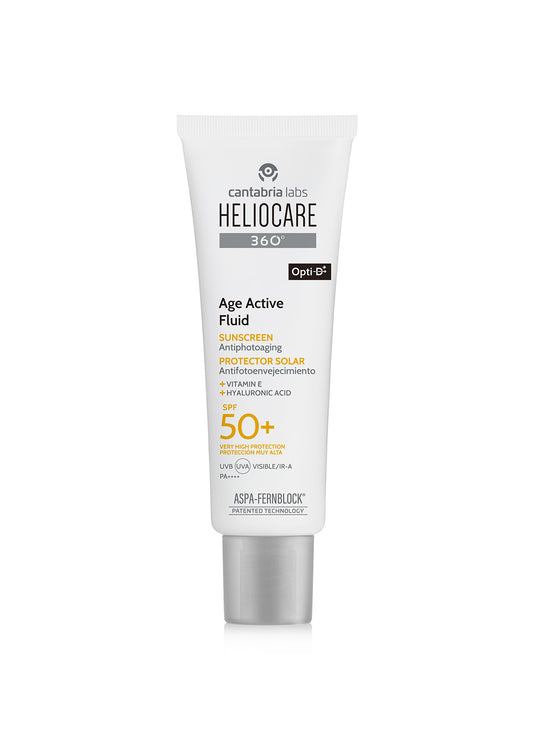
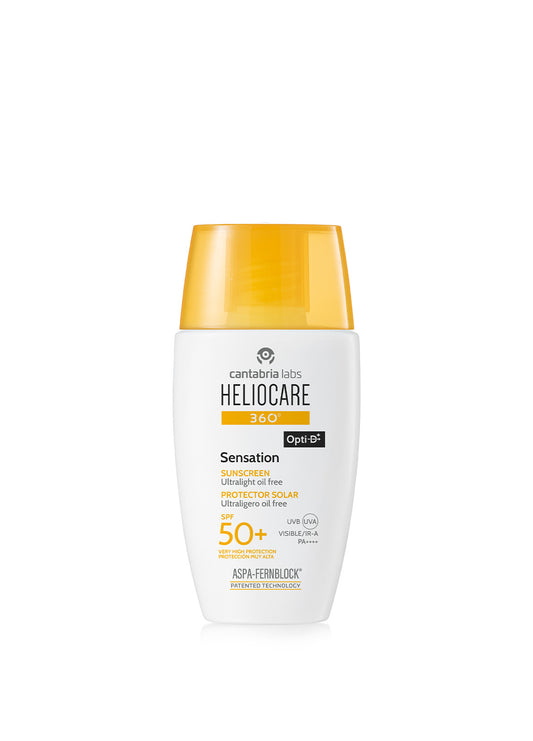
For reliable protection against light-induced skin damage, whether you are indoors or out, choose HELIOCARE 360°. Our award-winning range of dermatological products defends the skin against the full spectrum of light, including UV radiation, visible light and blue light from both the sun and artificial sources. HELIOCARE 360° is widely regarded as one of the most comprehensive skin protection ranges available, delivering high-level protection that goes far beyond traditional sunscreen.

At the heart of HELIOCARE 360° is Fernblock®+, a clinically-proven, patented antioxidant technology that protects against multiple types of light-induced damage, whilst strengthening the skin’s natural defences from within. The range is further enhanced by ASPA-Fernblock®, a next-generation bioactive complex that combines two patented systems to protect and support skin health, boost the efficiency of UV filters and enhance the skin’s natural ability to receive and utilise vitamin D.
Designed for everyday use, all year round, HELIOCARE 360° provides comprehensive protection against light damage and premature skin ageing. It protects the skin not only when outdoors, but also from exposure to indoor lights and the radiation that penetrates windows. Recognising that every skin type is unique, HELIOCARE 360° offers a wide range of formulations tailored to different skin concerns and indications, providing high-level, full-spectrum protection for every skin type, every single day.
Discover your personalised HELIOCARE 360° protection
Complete this quick skin quiz and let our dermatologist-led expertise guide you to the right formula.